DESIGN MOCKUP — not the live site · form not wired · figures tagged CONFIRM await YF verification
Home / MJF

HP Multi Jet Fusion,
with published tolerance tables.

Primofort runs HP Multi Jet Fusion on the same climate-controlled Dongguan floor as our SLS and PolyJet lines — HP PA 12, consistent mechanicals in volume, and the only process on this site where the machine's own maker publishes real per-material accuracy numbers.

HP PA 12 380 × 284 × 380 mm — 4200 / 5200 series Founded 2019 NDA on request
Start here

Is MJF right for your part?

The honest version. MJF earns its place for a specific reason — repeatable, documented accuracy in production volume — and it is the wrong tool outside that lane.

Choose MJF when…

  • You need the tolerance in writing. HP is the only manufacturer here that publishes real per-material tolerance tables — see below.
  • Fine detail and consistent mechanicals matter. A jetted fusing agent plus infrared energy gives more uniform properties part-to-part than a traced laser path.
  • You're moving from prototype to a real production batch. MJF is built for repeatable output across a nested build, not one-off parts.
  • PA 12 suits the application. HP PA 12 covers most functional housings, brackets and enclosures.

Look elsewhere when…

  • You need full colour. MJF parts print in natural grey. Full-colour models are a PolyJet job.
  • You need the nine SLS nylon grades — carbon-fibre Nylon 6, biocompatible white PA 12, and more. Those live on SLS, not here.
  • The part is larger than 380 × 284 mm in X/Y. That's PA 12's ceiling on this machine family; large single-piece parts belong on SLS's large-format floor.
  • You want a glossy, sealed finish straight off the machine. Raw MJF is matte — vapor smoothing fixes this as a second step.
The process

How MJF actually works.

Same starting point as SLS — a powder bed, built layer by layer — but a different way of fusing each layer. That difference is why MJF gives consistent mechanicals and fine detail in volume.

Spread a layer of powder

A carriage lays down a thin, even layer of PA 12 powder across the build bed — the same starting point as SLS.

Jet a fusing agent, then fuse with infrared

Rather than tracing the cross-section with a laser, print heads jet a fusing agent onto exactly the area that needs to become solid. An infrared lamp then passes over the bed and fuses that area — every layer, the same energy, the same way.

Cool, then unpack

The finished block cools under controlled conditions, then parts are excavated, de-powdered and bead-blasted clean. Unused powder is sieved and blended back in.

Why the fusing step matters. A laser has to trace an outline point by point, so energy delivery varies slightly with geometry and scan path. Jetting the fusing agent across the full layer and fusing it with a single infrared pass delivers the same energy to every particle in that area — which is the mechanical basis for HP's published tolerance tables below. No HP machine photograph is available for this page; the process is explained in text rather than illustrated with a substitute.
HP Multi Jet Fusion video

Multi Jet Fusion, shown by the people who build it

Video: HP · Jet Fusion 5000 series Watch ↗
Materials

HP PA 12 — plus PA 11 and PA 12 Glass Beads.

MJF's material line-up is narrower than SLS by design — HP certifies a small set of powders per machine so the tolerance tables below actually hold. Looking for the nine SLS nylons, including carbon-fibre and biocompatible grades? Those are on the materials page, not here.

Primary material
PA 12 HP

The material behind the tolerance tables on this page — HP's most widely used and best-documented MJF powder.

Also in HP's tables
PA 11

More impact-resistant than PA 12, at a wider tolerance band — see HP's published figures below.

Also in HP's tables
PA 12 GB glass beads

Glass-bead-filled PA 12 for higher stiffness — HP publishes a tolerance table for this grade too.

Full mechanical datasheets for PA 12, PA 11 and PA 12 GB will live on the materials page. This page focuses on what MJF adds that SLS doesn't: HP's own published tolerance tables, next.
Tolerances — this is MJF's advantage

HP publishes real per-material tolerance tables.

Every other tolerance figure on this site is a service-bureau convention — "typically achievable," not a machine specification. HP is the exception: for PA 12 on the Jet Fusion 5200 series, HP tests and publishes exact tolerance bands by part size, in its own documentation.

Nominal size0–30 mm30–50 mm50–80 mm
GeneralStandard process ±0.25 / ±0.42 mm ±0.30 / ±0.50 mm ±0.37 / ±0.60 mm
With HP 3D Process ControlClosed-loop process monitoring ±0.17 / ±0.25 mm ±0.20 / ±0.30 mm ±0.23 / ±0.37 mm
Figures are XY / Z, in millimetres, for HP PA 12 on the Jet Fusion 5200 series at Cpk 1.33 — as published in HP's own PA 12 accuracy documentation. HP's own footnote: figures are from HP's internal testing, using a 20–30% powder refresh ratio, natural cooling, and bead-blasted parts — not a guarantee for every part geometry or every operating condition. Tolerance for your specific part is confirmed at quote.

HP publishes comparable tables for PA 11 and PA 12 Glass Beads at the same three size bands, with wider bands for PA 11 and a mixed picture for PA 12 GB depending on axis. Ask our engineers for the full breakdown for your material.

Source: HP Multi Jet Fusion PA 12 accuracy and repeatability documentation (HP document 4AA8-5028ENW) · hp.com
Build volume

Two envelopes, one shorter in Z.

HP's Jet Fusion machines are not one size — the model matters. Never assume the 380 mm figure applies to every system.

Jet Fusion 4200 & 5200 series
380×284×380 mm

The full-height envelope — X × Y × Z in millimetres.

Jet Fusion 5000
380×284×250 mm

Same X/Y footprint as the 4200 and 5200 series, but a shorter 250 mm build height — check Z clearance before assuming a part fits.

Proof, not promises

Not a broker. Our own MJF line.

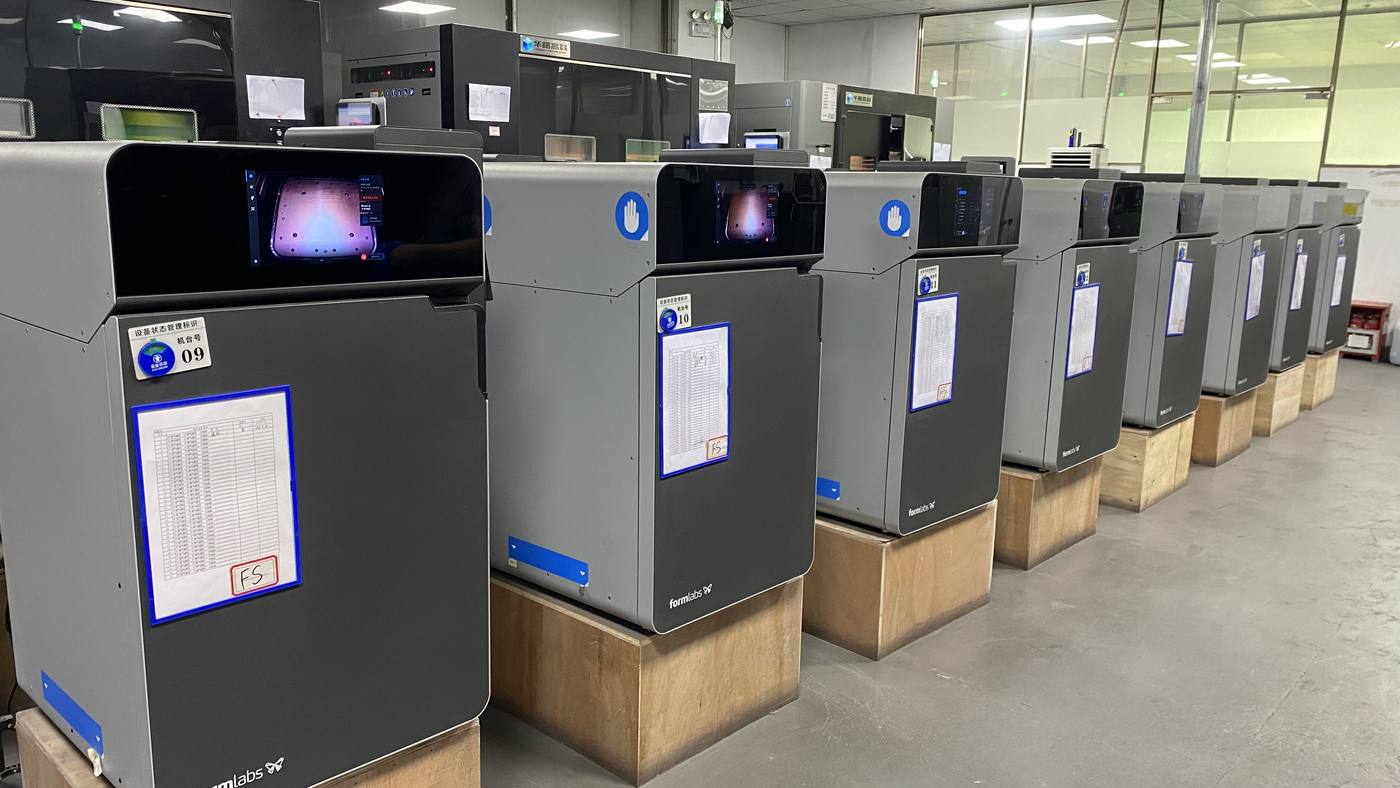
These photographs were taken on our production floor in Dongguan — the same floor that runs our SLS and PolyJet lines. No HP machine photograph is available for this page; we show the floor context instead of substituting another brand's machine.

Production floor at Primofort, Dongguan
Primofort production floor — Dongguan
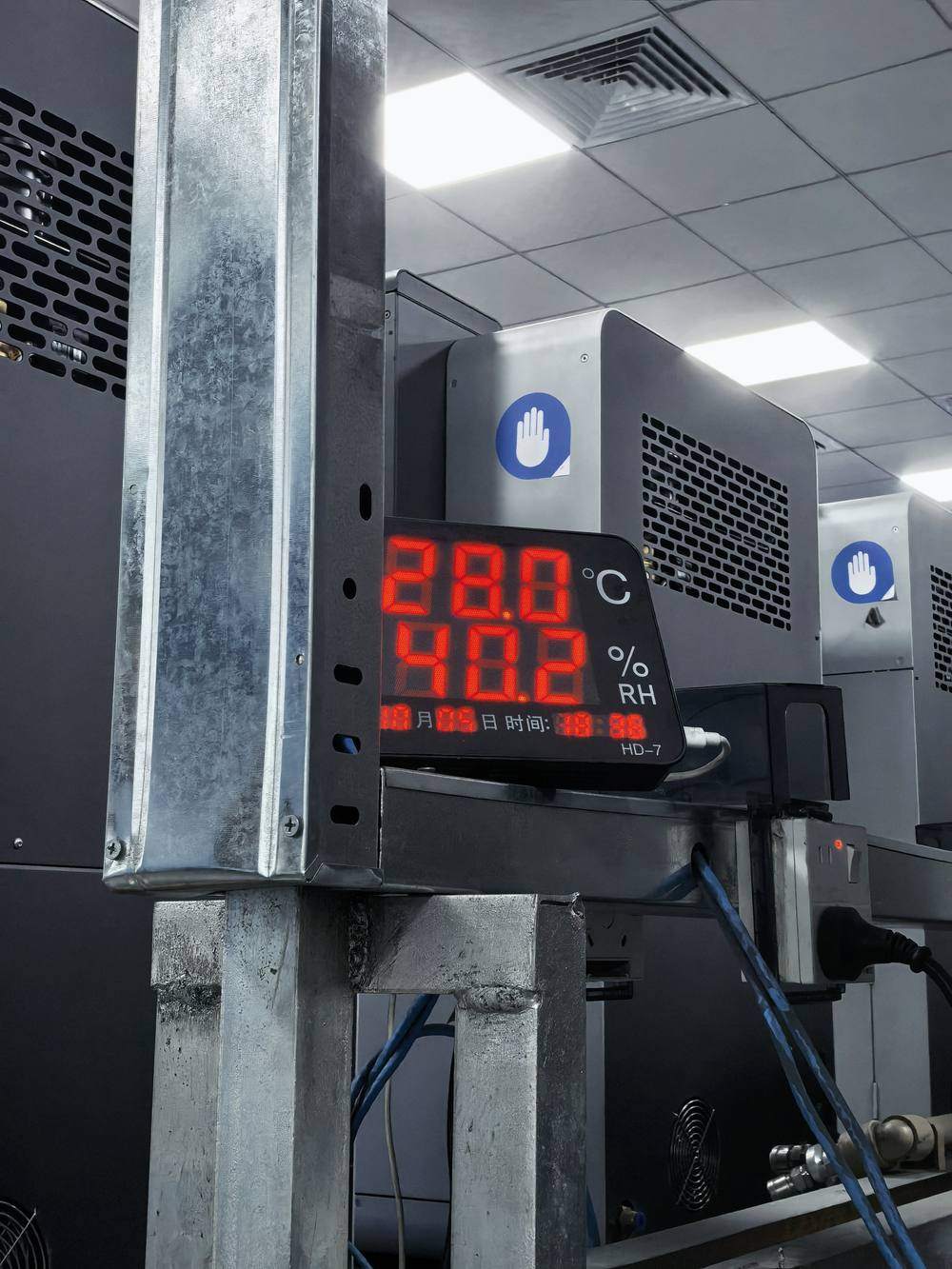
Climate monitoring on the production floor
28.0 °C · 40.2 %RH — monitored floor climate
Machines on our floor Formlabs Farsoon Technologies HP Stratasys
Primofort · 元城科技 — Room 303, Building 3, Huakecheng, Guanchang Rd, Dongcheng, Dongguan, Guangdong 523128, China
Get a quote

An engineer replies within 24 hours.

  • Real engineer, real quote. Not an auto-mailer — a person who has read your requirements and looked at your part.
  • Your IP stays yours. We send a secure link for CAD files; nothing is shared outside the project team. NDA on request.
  • We will tell you if MJF is wrong for your part. If SLS or PolyJet suits it better, we would rather say so at quote than after you have paid.
Prefer direct? service@primofort.com  ·  +86 158 9991 6661 (WhatsApp)
This is a design mockup — the form isn't wired yet. On the live site this submission reaches Primofort's engineers.
We'll reply within 24 hours with your quote and a secure link for CAD files. If anything fails, email us directly — your enquiry is never dropped.

Ready to see a real quote?

Send your part and an engineer replies within 24 hours — no auto-mailer, no obligation.