Primofort runs Stratasys PolyJet on the same Dongguan floor as our SLS and MJF lines — the process to reach for when a model has to look right, in full colour, straight off the machine, rather than just fit and function correctly in plain grey nylon.
The honest version. PolyJet earns its place for one reason — appearance — and it is the wrong tool the moment the part needs to actually function under load.
Nothing like a powder bed. PolyJet jets liquid photopolymer droplets — like an inkjet printer, but building upward — and cures each layer with UV light as it goes.
Print heads jet tiny droplets of liquid photopolymer resin across the tray, layer by layer — multiple materials and colours can be jetted side by side in the same pass.
A UV lamp on the same carriage cures each layer as soon as it's jetted, so the model is fully solid the moment the build finishes — no separate curing step.
A gel-like support material is jetted alongside the model and washed or blasted away afterward, leaving the full-colour, multi-material part underneath.
PolyJet's material family is photopolymer resin, cured by UV light — a different chemistry from the PA 11 / PA 12 nylon powders used on our SLS and MJF lines. Choose PolyJet for how a part looks; choose SLS or MJF for how it has to perform.
Colour is jetted into the model itself during the build — no painting or dyeing step needed to get a full-colour result.
Rigid, opaque, and rubber-like flexible photopolymers can be combined within a single model, placed exactly where each property is needed.
Unlike our SLS and MJF machines, PolyJet's build platform is circular — quoting a rectangular X × Y × Z envelope for this process would misstate how the machine actually builds. Official figures for the current Stratasys J55 Prime tray:
Up to 1,174 cm² (182 in²) of usable printing area on the round tray — the platform footprint, not a length-and-width box.
190 mm print height, with 187 mm as the maximum printable height in practice.
As with HP's tables on the MJF page, these are manufacturer-published numbers for rigid materials on the J55 Prime — not a service-bureau estimate.
| Confidence band | Under 100 mm | Above 100 mm |
|---|---|---|
| 1σOne standard deviation | ±150 µm | ±0.15% |
| 2σTwo standard deviations | ±180 µm | ±0.2% |
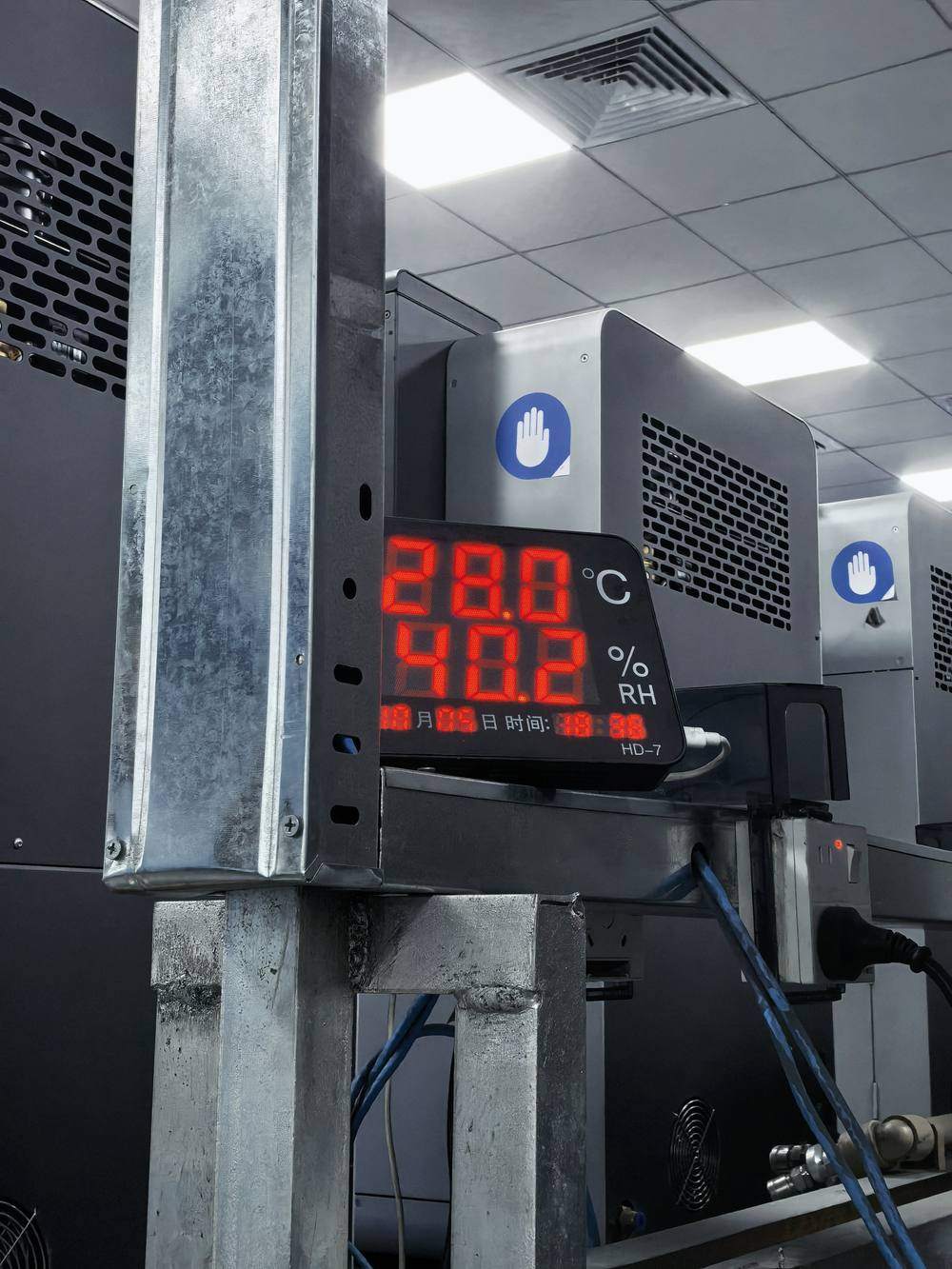
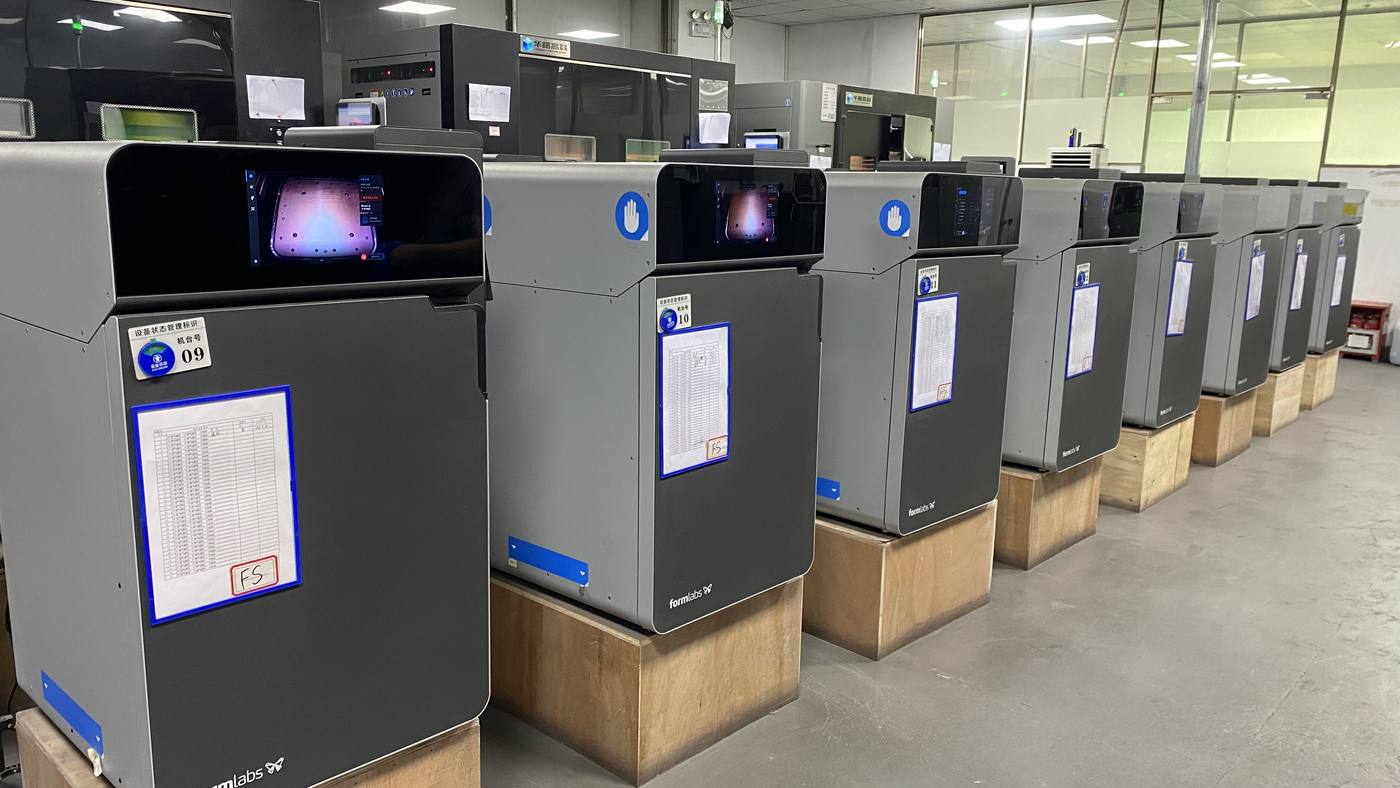
These photographs were taken on our production floor in Dongguan — the same floor that runs our SLS and MJF lines. No Stratasys machine photograph and no full-colour sample photograph are available for this page yet — we show the floor context instead of substituting another brand's machine or someone else's colour parts. Sample photography is being arranged.
HP
Stratasys
Send your part and an engineer replies within 24 hours — no auto-mailer, no obligation.